What Is Acoustics? Simple Guide for Better Sound at Home & Office
Acoustics may sound like a technical field reserved for engineers, architects, or musicians — but it affects every space you live, work, and relax in.
Whether you’re trying to enjoy a quiet evening, improve focus at work, or reduce echo in your office gym or church hall, understanding the basics of acoustics helps you create clearer, more comfortable environments.
This guide breaks it down without complicated physics — just practical, real-world acoustics for everyday people.
What Exactly Is Acoustics?
Acoustics is the science of how sound behaves in a space — how it travels, bounces, gets absorbed, and is heard.
In simple terms:
Acoustics = How sound behaves inside your room.
Good acoustics = Clear, balanced, comfortable sound.
Bad acoustics = Echo, muddiness, noise, distraction, stress.
Why Does Acoustics Matter in Real Life? (Simple Examples)
At Home
- You hear echo when watching TV
- Noise from upstairs or outside feels loud
- Your baby’s room feels too “boomy”
- You struggle to relax because the space sounds “hard”
At Work
- Meeting rooms sound hollow
- Online calls feel unclear
- Offices get noisy and distracting
- People raise their voices without realising
Good acoustics make spaces feel calm, focused, pleasant, and reduce stress — especially in homes with babies or in offices with open layouts.
How Sound Behaves in a Room (Simple Breakdown)
Sound interacts with your room in three ways:
1. Reflection (Echo)Sound bounces off hard surfaces like:
- glass
- tiles
- cement walls
- wood flooring
This creates echo or “harshness.”
2. Absorption
Soft materials absorb sound:
- acoustic panels
- carpets
- curtains
- upholstered furniture
This reduces echo and makes voices clearer.
3. Diffusion
Sound spreads evenly across a room using:
- diffusers
- bookshelves
- uneven surfaces
This prevents “dead spots” or “boomy corners.”
Common Acoustic Problems in Malaysian Homes & Offices
Echo / Long Reverberation
Rooms feel loud and tiring, especially with tiles and concrete.
Poor Speech Clarity
Meetings or conversations sound unclear.
Noise Leakage Between Rooms
Sound travels easily through walls, doors, or ceilings.
Air-conditioning Noise
Hard AC blowers create a noisy environment.
Simple Ways to Improve Acoustics (Beginner-Friendly)
1. Add soft furnishings
Carpets, area rugs, curtains, or sofas help reduce echo.
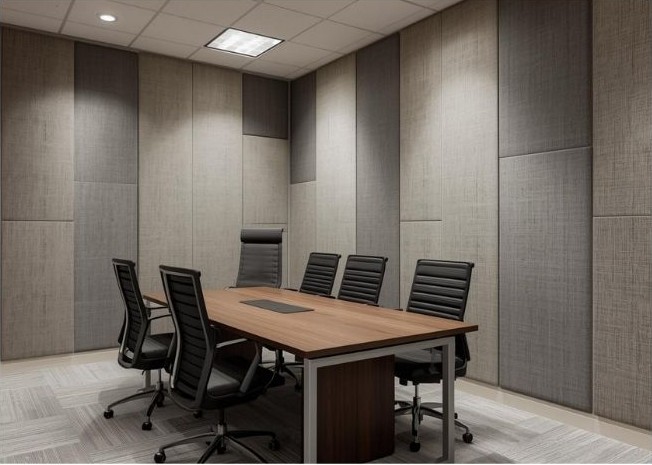
2. Install acoustic panels
Place them on:
- walls
- ceilings
- behind workstations
- meeting rooms
- TV areas
3. Seal gaps around doors
This reduces noise entering or escaping a room.
4. Add bass absorption
Low frequencies often build up in corners.
5. Use bookshelves for diffusion
A simple, cost-effective acoustic trick.
When Should You Consider Professional Acoustic Treatment?
You likely need acoustic treatment if:
- Echo makes it uncomfortable to talk
- Your TV sound is unclear
- Meeting rooms are noisy
- You keep increasing your speaker volume
- You can hear neighbours (or they hear you)
- You run a church, gym, hall, or event space
Professionals can measure reverberation, predict improvements, and design the correct treatment.
Contact Us – We can help you!
How Acoustics Improves Well-Being

Good acoustics create:
- calmer environments
- better focus
- reduced stress
- improved productivity
- healthier communication
- better sleep
View our articles on Acoustic Wellness Insights
Summary
Acoustics = how sound behaves in your space.
Bad acoustics → stress, echo, noise, distraction.
Good acoustics → clarity, comfort, peace, productivity.
And with a few simple improvements — your home or office can sound (and feel) completely different.
Read more.
Article 2 (Why Acoustics Matter)
Article 3 (Echo vs Reverberation)
Article 4 (NRC vs STC)
Service Page (Acoustic Treatment)
If you need more guidance from someone, feel free to Contact Us.
0 Comments